
10 Essential Strategies of Customer Service for 2026
Discover 10 powerful strategies of customer service to boost satisfaction and loyalty. Implement these actionable tips and examples to excel in 2026.
In a competitive market where a single negative interaction can sever a customer relationship, mastering the art of service is no longer optional. It's an essential driver for survival and growth. But the old playbooks are outdated. Modern customers expect seamless, proactive, and personalized support across every channel, at any time. The challenge isn't just to respond; it's to anticipate needs and deliver value before a problem even arises.
This article moves beyond generic advice to provide a deep dive into 10 proven strategies of customer service that are actively shaping successful business outcomes. We're not just listing concepts; we are breaking down each strategy into actionable steps, providing real-world examples from industry leaders, and identifying the key metrics you need to track your success. This guide is built for immediate application, designed to give you a clear roadmap for implementation.
Whether you're a small business owner aiming to automate support, an e-commerce operator looking to improve the shopper experience, or a SaaS team needing better on-site assistance, this list offers a comprehensive toolkit. You will learn how to reduce support tickets with AI-powered self-service, build unbreakable loyalty through emotional intelligence, and turn negative feedback into a powerful growth engine. These frameworks will equip you to deliver the exceptional experiences that transform satisfied customers into lifelong brand advocates, securing your competitive edge.
1. Master Omnichannel Customer Service for a Unified Experience
Modern customers interact with businesses across a wide array of touchpoints, from social media DMs to in-store visits. One of the most powerful strategies of customer service is to ensure these interactions are not isolated incidents but part of a single, continuous conversation. This is the core of an omnichannel approach: creating a unified, seamless experience where context and history travel with the customer from one channel to the next.
Unlike a multichannel strategy, which simply offers support on various platforms, omnichannel service integrates them. A customer can start a query with a chatbot, escalate to a live agent via chat, and then receive a follow-up email without ever having to repeat their issue or account details. This integration eliminates major points of friction and shows the customer their time is valued.
How to Implement an Omnichannel Strategy
Successfully deploying an omnichannel system requires both the right technology and a customer-centric mindset.
- Centralize Customer Data: Invest in a Customer Relationship Management (CRM) platform or a customer service helpdesk that can consolidate interactions from all channels. This creates a single source of truth for every customer's history.
- Train for Context: Equip your support agents to not just solve the immediate problem but to also review the customer's recent interaction history. An agent answering a phone call should be able to see the customer was just on the website's live chat.
- Map Customer Journeys: Identify the most common paths customers take when seeking support. Do they often start on social media and then move to email? Understanding these patterns helps you optimize the handoff between channels.
Key Insight: The goal of omnichannel service is to make the channel invisible to the customer. They should feel like they are having one continuous conversation with your brand, not a series of separate ones with different departments.
For example, Amazon's ecosystem allows a customer to browse a product on their app, add it to their cart using a voice command with Alexa, and receive shipping updates via email and SMS. Each step is connected, creating a frictionless journey that strengthens customer loyalty and simplifies their experience. This is a benchmark for effective customer service strategies in the digital age.
2. Embrace Proactive Customer Service to Anticipate Needs
The best customer service experiences often happen before the customer even realizes they need help. Shifting from a reactive to a proactive model is one of the most impactful strategies of customer service you can adopt. This approach involves anticipating customer issues and reaching out to provide solutions or information before they are forced to contact you. It’s the difference between waiting for a problem to occur and preventing it from ever happening.
Instead of just solving problems, proactive service aims to build trust and demonstrate genuine care for the customer's experience. When a company alerts you to a potential issue and already has a solution in place, it transforms a moment of potential frustration into one of reassurance and confidence. This preventive care shows customers that you are monitoring their journey and are invested in their success.
How to Implement a Proactive Strategy
Building a proactive service model requires a shift in mindset from problem-solving to problem-prevention, supported by the right processes.
- Implement Comprehensive Monitoring: Use tools to monitor product usage, service status, and customer behavior. For example, a SaaS company might track usage patterns that indicate a user is struggling with a feature and can then offer targeted help.
- Establish Clear Communication Protocols: Develop pre-written, personalized templates for common scenarios like service outages, shipping delays, or potential billing errors. This ensures your outreach is fast, clear, and consistent.
- Train Teams to Identify Warning Signs: Empower your support agents and account managers to recognize early indicators of customer frustration or potential churn. Give them the autonomy to reach out with helpful resources or check-ins.
Key Insight: Proactive service turns your customer support from a cost center into a value-add. By preventing problems, you not only reduce support tickets but also actively enhance customer loyalty and retention.
A prime example is an airline that automatically rebooks passengers on a new flight when their original one is delayed due to weather, sending a notification with the new details before the customer even arrives at the airport. This turns a stressful situation into a seamless, positive experience, solidifying the customer's relationship with the brand and showcasing a superior level of care.
3. Empower Customers with Robust Self-Service Support
One of the most effective strategies of customer service is to empower customers to find answers themselves, exactly when they need them. This is the essence of self-service support, a customer-centric approach that provides users with comprehensive knowledge bases, FAQs, tutorials, and automated tools. This strategy not only meets the modern customer's preference for independence but also frees up live agents to handle more complex issues.
By offering immediate, 24/7 access to information, you reduce customer effort and increase satisfaction. A well-designed self-service portal acts as your most knowledgeable and tireless support agent, capable of resolving common issues instantly without requiring the customer to wait in a queue. This shift from reactive to proactive support demonstrates a deep respect for the customer's time and intelligence.

How to Implement a Self-Service Strategy
Building an effective self-service ecosystem involves a strategic approach to content creation and accessibility.
- Prioritize Content with Data: Analyze common support tickets, chat logs, and agent feedback to identify the most frequently asked questions. Use this data to prioritize the creation of knowledge base articles, tutorials, and FAQs that address the most pressing customer needs first.
- Optimize for Searchability: A knowledge base is only useful if customers can find what they're looking for. Implement a powerful, intuitive search function with keyword tagging and category filters. Write content using clear, simple language that your customers would use when searching for a solution.
- Provide an Escape Hatch: Self-service can't solve every problem. Always provide a clear and easy-to-find escalation path to a live agent, such as a "Contact Us" button or a live chat widget, ensuring customers never feel trapped in a support loop.
Key Insight: The goal of self-service is not to replace human agents, but to augment them. It empowers customers with instant solutions for common issues, allowing your skilled support team to focus on high-impact, complex problems that require a human touch.
Tech giants like Apple and Microsoft have perfected this model. Apple’s extensive library of support articles and video tutorials allows users to troubleshoot nearly any device issue, while Microsoft's automated tools can diagnose and fix common Windows problems without human intervention. This approach is a cornerstone of modern customer service strategies and can be enhanced with customer support automation to further streamline the experience.
4. Deliver a Hyper-Personalized Customer Experience
In an era of mass marketing, one of the most effective strategies of customer service is to make each customer feel uniquely seen and valued. Personalization goes beyond simply using a customer's first name in an email. It involves a data-driven strategy that tailors interactions, recommendations, and support based on an individual's specific preferences, purchase history, and behavior. This approach transforms a generic service transaction into a relevant and engaging personal dialogue.
A personalized experience demonstrates that you understand your customers' needs, often before they do. By leveraging customer data, you can anticipate questions, suggest relevant products, and provide support that feels tailor-made. This not only solves immediate issues more efficiently but also builds a deep, lasting connection that fosters loyalty and turns customers into brand advocates.
How to Implement a Personalization Strategy
Creating a personalized journey requires a thoughtful approach to data collection and a commitment to using that information to genuinely improve the customer experience.
- Segment Your Audience: Start by grouping customers based on demographics, purchase history, and on-site behavior. This allows you to create targeted campaigns and support flows that resonate with specific segments.
- Ensure Data Transparency: Be upfront about the data you collect and how you use it. Building trust is crucial for personalization to be effective, so provide clear privacy policies and easy opt-out options.
- Leverage Technology: Use a CRM and AI-powered tools to track customer interactions and automate personalized recommendations. This technology can analyze patterns at a scale impossible to achieve manually.
- Balance Automation and Human Touch: While automation drives personalization, ensure there are clear paths to human agents for complex or sensitive issues. The goal is to make service more efficient, not to eliminate human connection.
Key Insight: True personalization isn't about data for its own sake; it's about using that data to create moments of relevance and empathy that show the customer you understand their individual journey.
For instance, Spotify excels at this by creating customized playlists like "Discover Weekly" and "Your Top Songs." These are generated based on a user's listening history, liked songs, and even the time of day they listen. This creates a deeply personal and sticky experience that keeps users engaged and subscribed. You can learn more about how to improve customer experience with these kinds of tailored strategies.
5. Cultivate Emotional Intelligence for Deeper Connections
Technical proficiency and product knowledge are crucial, but the most memorable customer service interactions are often defined by a human touch. One of the most impactful strategies of customer service involves cultivating emotional intelligence (EI) within your support team. This approach prioritizes understanding, managing, and responding appropriately to customer emotions, transforming routine transactions into meaningful, positive experiences.

Emotional intelligence in service means agents can recognize a customer's frustration, even if it's unstated, and adapt their tone and language to de-escalate the situation. It’s about more than just saying "I understand"; it's about demonstrating genuine empathy and making the customer feel heard and valued as an individual. This human-centered strategy builds trust and fosters a strong emotional connection to your brand.
How to Foster Emotional Intelligence
Integrating EI into your service culture requires intentional training and systemic support for your team.
- Provide Comprehensive Empathy Training: Go beyond standard scripts. Use role-playing exercises to help agents practice active listening, recognize emotional cues (like tone of voice or word choice), and respond with empathetic language.
- Empower Your Team: Give agents the autonomy to solve problems creatively without rigid procedural constraints. Ritz-Carlton famously empowers employees with a discretionary budget to resolve guest issues, trusting their emotional judgment to create a positive outcome.
- Analyze Emotional Pain Points: Use customer feedback, surveys, and call transcripts to identify recurring situations that cause frustration or stress. Address these root causes to reduce the emotional labor required from your team.
- Support Agent Well-being: High-emotion jobs can lead to burnout. Implement stress management programs and promote self-care to ensure your team has the emotional resilience needed to support customers effectively.
Key Insight: Emotional intelligence isn't about being overly emotional; it's about being smarter with emotions. An agent who can manage their own reactions and positively influence a customer's feelings is a powerful asset for building lasting loyalty.
Zappos built its brand on this principle. Its legendary support stories often involve agents spending hours on the phone with a customer, not just to solve a problem but to make a personal connection. This focus on empathy and emotional engagement is a core reason for their incredibly loyal customer base and a prime example of advanced customer service strategies in action.
6. Leverage Data to Drive Proactive Customer Service
The most effective strategies of customer service are not just reactive; they are predictive. A data-driven approach moves support from a cost center focused on solving problems to a value-driving engine that anticipates customer needs and optimizes every interaction. It involves systematically collecting, analyzing, and acting on customer data to make informed decisions that enhance both the customer experience and operational efficiency.
By leveraging metrics like customer satisfaction (CSAT) scores, first-contact resolution rates, and ticket volume trends, businesses can pinpoint systemic issues and opportunities for improvement. Instead of guessing what customers want, a data-driven strategy provides quantitative proof. This allows teams to allocate resources more effectively, tailor support to individual customer segments, and proactively address potential friction points before they escalate into major complaints.
How to Implement a Data-Driven Strategy
Deploying a data-driven approach requires a commitment to both technology and a culture of continuous, evidence-based improvement.
- Establish Key Performance Indicators (KPIs): Define what success looks like by selecting clear, measurable metrics. Focus on a mix of operational KPIs (e.g., average handle time) and customer-centric KPIs (e.g., Net Promoter Score) to get a holistic view.
- Invest in Analytical Tools: Implement a robust helpdesk or CRM system with built-in analytics and reporting features. These platforms consolidate data from various channels and use dashboards to visualize trends and performance.
- Train Your Team on Data Literacy: Equip your agents and managers with the skills to not only read reports but to interpret the "why" behind the numbers. Train them to use these insights to personalize interactions and improve their own performance.
Key Insight: Data-driven service isn't about replacing human intuition with algorithms; it's about empowering your team with the right information at the right time to make smarter, more empathetic decisions.
For instance, American Express uses sophisticated data models to detect fraudulent activity in real-time and proactively contact customers, often before the cardholder is even aware of a problem. This preventative service turns a potential crisis into a moment of reassurance, building immense trust and loyalty. This is a prime example of using data as a strategic asset in customer service.
7. Empower Employees to Act as Customer Advocates
One of the most impactful strategies of customer service involves shifting authority from management to the front lines. Employee empowerment is a service philosophy that gives representatives the autonomy, resources, and trust to resolve customer issues on the spot. Instead of navigating rigid scripts and seeking multiple approvals, empowered agents can make immediate decisions that prioritize customer satisfaction.
This approach transforms the role of a service agent from a simple problem-passer to an active problem-solver and brand advocate. When an employee can offer a discount, process a refund, or provide a complimentary service without a manager's sign-off, it dramatically reduces resolution time and customer effort. This creates a far more positive and memorable interaction, demonstrating that the company trusts its team to do what is right for the customer.
How to Implement an Employee Empowerment Strategy
True empowerment requires a foundation of trust, clear guidelines, and ongoing support from leadership.
- Establish Clear Boundaries: Define the scope of employee authority. For example, provide a specific budget for service recovery (like a discretionary fund) or a clear set of actions they are authorized to take without approval.
- Train for Values, Not Just Rules: Focus training on the company’s core values and service philosophy. This equips employees to make judgment calls that align with the brand’s mission, even in unexpected situations.
- Create Supportive Feedback Loops: Implement a system where employees can share the outcomes of their decisions. This helps management understand common issues and allows for continuous refinement of the empowerment guidelines.
- Recognize Empowered Decisions: Publicly and privately celebrate instances where employees used their autonomy to create an excellent customer experience. This reinforces the desired behavior and builds confidence across the team.
Key Insight: Empowering employees isn't about abandoning rules; it's about providing a framework of trust and guidelines that allows them to use their judgment to create the best possible outcome for the customer.
The Ritz-Carlton is a legendary example, famously allowing any employee to spend up to $2,000 per guest to resolve a problem or enhance an experience. This level of trust ensures that any team member, from housekeeping to the front desk, can act immediately to uphold the brand's reputation for exceptional service, making it one of the most effective customer service strategies in practice.
8. Build a Proactive Customer Feedback Loop
Simply resolving issues isn't enough; one of the most transformative strategies of customer service involves actively listening to what your customers are saying and using that insight to fuel continuous improvement. A customer feedback loop is a systematic process for collecting, analyzing, and acting on customer input. This strategy turns customer service from a reactive cost center into a proactive engine for growth and innovation.
Instead of waiting for customers to complain, this approach actively seeks out their opinions on products, services, and experiences. By systematically closing the loop, you not only fix individual problems but also demonstrate that your company values customer opinions. This builds immense trust and loyalty, as customers see their feedback directly influencing the evolution of your brand.
How to Implement a Customer Feedback Loop
Creating an effective feedback system requires a commitment to listening and a clear process for taking action.
- Diversify Feedback Channels: Collect input from multiple sources to get a holistic view. Use post-interaction surveys (like CSAT or NPS), online reviews, social media listening tools, and direct conversations between customers and your support team.
- Make it Effortless to Participate: Reduce friction in the feedback process. Use one-click surveys in emails, embed feedback forms on your website, and empower agents to tag interactions with specific feedback themes during their conversations.
- Analyze and Act on Insights: Centralize feedback and look for trends. If multiple customers report confusion about a specific feature, that’s a clear signal for your product team. Share these insights across departments to drive meaningful change.
- Communicate the Outcome: This is the most crucial step. "Closing the loop" means informing customers about the changes made based on their suggestions. A simple email update or a blog post can show your community that their voice matters.
Key Insight: A feedback loop fails if the information collected isn't used. The real power comes from translating raw customer feedback into concrete business improvements and then telling customers what you've done.
For example, Airbnb's dual-review system for hosts and guests creates a powerful feedback loop that builds trust and accountability. This feedback directly influences rankings and booking decisions, incentivizing both parties to provide excellent experiences. Similarly, Tesla uses customer feedback to push over-the-air software updates, directly improving the product based on user suggestions and making customers feel like co-creators. By implementing a similar strategy, you can find out how to improve customer satisfaction in a way that benefits your entire user base.
9. Turn Social Media into a Proactive Support Channel
In today's hyper-connected world, social media platforms are no longer just marketing tools; they are essential customer service hubs. One of the most visible strategies of customer service involves meeting customers where they are already active and vocal. This approach transforms platforms like Twitter, Facebook, and Instagram into primary channels for support, engagement, and real-time problem-solving, where customers expect fast and public responses.
Leveraging social media for customer service means moving beyond promotional posts to actively listen and respond to customer inquiries, complaints, and feedback. This public-facing support not only resolves an individual's issue but also demonstrates the brand's commitment to its entire community. It builds trust and turns potentially negative interactions into opportunities for showcasing brand accountability and care.
How to Implement a Social Media Service Strategy
An effective social media support system requires speed, empathy, and a clear operational plan to manage public conversations effectively.
- Establish Rapid Response Times: Set clear internal goals for responding to mentions and direct messages, often within an hour. Timeliness is critical on social media, where user expectations for speed are significantly higher than on traditional channels like email.
- Use Social Listening Tools: Employ tools like Sprout Social or Hootsuite to monitor brand mentions, relevant keywords, and hashtags. This allows your team to proactively identify and address customer issues, even when your brand isn't directly tagged.
- Develop Clear Escalation Paths: Not all issues can be resolved in a tweet. Create a seamless process for moving complex or sensitive conversations from the public eye to a private channel like DMs, email, or a phone call without losing context.
Key Insight: Social media customer service is a spectator sport. Every public interaction is a chance to show hundreds or thousands of other followers how much you value your customers, turning a single resolution into a powerful marketing moment.
For instance, JetBlue has long been praised for its dedicated Twitter support team (@JetBlue). They provide real-time flight updates, rebook passengers, and answer queries with a human touch, all in the public feed. This transparency not only helps the individual customer but also builds a strong reputation for reliability and customer-centric service that everyone can see.
10. Turn Service Failures into Opportunities with a Service Recovery Strategy
No matter how refined your processes are, service failures are inevitable. A service recovery strategy is a systematic approach to handling these mishaps, turning a negative customer experience into a memorable, positive one. It goes beyond a simple apology or fix; it’s about acknowledging the failure, exceeding the customer’s expectations in the resolution, and ultimately strengthening their loyalty. This proactive approach transforms complaints into opportunities to showcase your commitment to customer satisfaction.
Instead of viewing a customer complaint as a problem, this strategy frames it as a gift. It's a chance to demonstrate accountability and empathy, which can create a more dedicated customer than one who never had an issue at all. A well-executed recovery can prevent customer churn and generate powerful positive word-of-mouth, making it one of the most impactful strategies of customer service.
The following infographic outlines the core process of an effective service recovery.
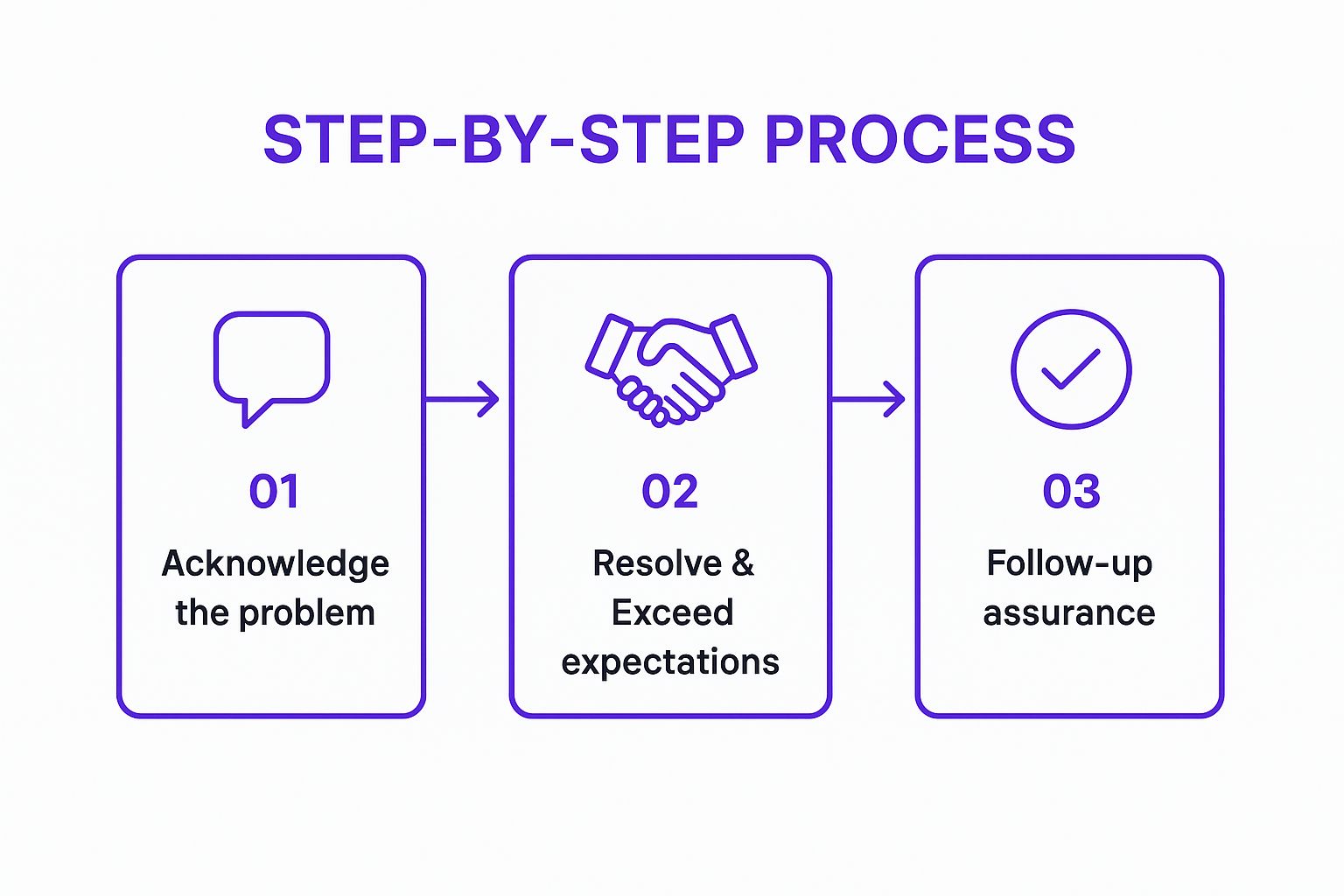
This visual process flow highlights that a successful recovery is a structured, multi-step engagement, not a single action.
How to Implement a Service Recovery Strategy
A robust service recovery plan empowers your team to act decisively and compassionately when things go wrong.
- Respond Quickly and Take Ownership: The first few moments after a complaint is lodged are critical. Acknowledge the issue immediately and accept responsibility without making excuses. A swift, sincere apology validates the customer’s frustration.
- Listen Actively and Offer an Empowered Solution: Train your team to listen to the full story and empathize. Most importantly, empower them to offer a meaningful resolution on the spot, one that not only fixes the problem but adds value, like a future discount or complimentary upgrade.
- Use Failures as Learning Opportunities: After resolving the issue, analyze the root cause. Was it a process flaw or a training gap? Use this data to make systemic improvements that prevent the issue from recurring for other customers. In critical situations, employing expert social media crisis management tactics is essential to effectively perform service recovery and protect brand image.
Key Insight: The goal of service recovery isn't just to return the customer to a neutral state; it's to make them feel more valued and respected than they did before the service failure occurred.
For example, when a guest at a Ritz-Carlton hotel reports an issue, employees are empowered with a discretionary budget to resolve the problem immediately and in a way that exceeds expectations, such as offering a complimentary spa treatment for a noisy room. This turns a potential detractor into a lifelong advocate for the brand.
Top 10 Customer Service Strategies Compared
| Customer Service Strategy | Implementation Complexity | Resource Requirements | Expected Outcomes | Ideal Use Cases | Key Advantages |
|---|---|---|---|---|---|
| Omnichannel Customer Service | High - complex integration and training | Significant technology and staff | Seamless experience, higher retention | Businesses with multiple customer touchpoints | Unified data, consistent messaging, increased efficiency |
| Proactive Customer Service | High - needs advanced monitoring systems | Investment in analytics & training | Prevent issues, reduce support volume | Industries with predictable service issues | Prevents frustration, enhances loyalty, reduces churn |
| Self-Service Customer Support | Medium - content creation & maintenance | Content teams, AI tools | Faster issue resolution, 24/7 availability | Businesses with common/simple queries | Cost reduction, scalability, customer autonomy |
| Personalized Customer Experience | High - data integration and analysis | Advanced data platforms, ML tech | Higher engagement and sales | E-commerce, streaming, personalized services | Increased conversion, loyalty, competitive differentiation |
| Emotional Intelligence | Medium to High - extensive training | Training programs, cultural shift | Improved satisfaction and loyalty | High-touch service industries | Better conflict resolution, customer trust |
| Data-Driven Customer Service | High - robust data systems and analytics | Technology investment, skilled staff | Optimized service, data-based decisions | Large enterprises prioritizing metrics | Objective insights, trend identification |
| Employee Empowerment Strategy | Medium - training and policy adjustments | Training, management oversight | Faster resolution, higher satisfaction | Brands valuing frontline autonomy | Faster decisions, empowered staff, creativity |
| Customer Feedback Loop Strategy | Medium - multi-channel setup and analysis | Feedback tools, analysis teams | Continuous improvement, loyalty | Customer-centric companies | Direct insights, data-driven improvements |
| Social Media Customer Service | Medium - platform-specific skills required | Social media tools, staff training | Real-time engagement, brand visibility | Brands with active social media presence | Wide reach, cost-effective, real-time interaction |
| Service Recovery Strategy | Medium to High - protocols and training | Staff training, compensation funds | Loyal customers from recovered failures | Service industries managing complaints | Turns dissatisfaction into advocacy, competitive edge |
Integrating Your Strategies for a Future-Proof Customer Experience
We have journeyed through ten distinct yet interconnected strategies of customer service, from the seamless integration of an omnichannel approach to the critical art of service recovery. Each strategy represents a powerful tool in your arsenal, capable of transforming customer interactions from mere transactions into meaningful, loyalty-building relationships.
However, the true mastery of customer service doesn't come from implementing these ideas in isolation. The most successful brands understand that these strategies are not a checklist to be completed but rather a set of threads to be woven into the very fabric of their company culture. Think of it as a symphony: each instrument must play its part, but it's the harmony they create together that results in a masterpiece.
From Individual Tactics to a Unified Ecosystem
The real power emerges when you create synergy between these approaches. A robust self-service portal (Strategy #3) becomes exponentially more effective when it's part of a cohesive omnichannel experience (Strategy #1), allowing a customer to start with a knowledge base article and seamlessly transition to a live chat if their issue remains unresolved.
Similarly, data-driven insights (Strategy #6) are the fuel for genuine personalization (Strategy #4). By analyzing customer behavior, you can move beyond using a customer's first name in an email and start offering proactive support (Strategy #2) that anticipates their needs before they even arise. This holistic view is what separates adequate service from an exceptional experience.
Key Takeaway: Stop viewing customer service strategies as separate initiatives. Instead, build a unified ecosystem where each element reinforces and amplifies the others, creating a consistent and delightful customer journey at every touchpoint.
Your Actionable Path Forward
Moving from theory to practice can feel daunting, but a structured approach will pave the way for success. Don't try to overhaul everything at once. Instead, adopt a phased, strategic implementation plan.
Here are your next steps:
- Conduct a Comprehensive Audit: Begin by evaluating your current customer service performance against the ten strategies discussed. Where are your biggest gaps? Where do you already excel? Use customer feedback, support ticket data, and team interviews to get a clear picture.
- Prioritize for Maximum Impact: Identify the one or two strategies that will deliver the most significant improvement for your specific audience. For an e-commerce store, perfecting social media service and service recovery might be top priorities. For a SaaS company, bolstering self-service options and proactive support could be game-changers.
- Empower Your Team: Remember that even the best strategies are only as good as the people executing them. Invest in training focused on emotional intelligence (Strategy #5) and empower your employees (Strategy #7) with the autonomy to make decisions that favor the customer.
- Integrate and Iterate: As you implement new strategies, focus on how they connect with your existing processes. Create robust customer feedback loops (Strategy #8) to continuously gather insights, measure results, and refine your approach.
By weaving these elements together, your customer service efforts become more than just a cost center; they transform into a powerful engine for growth. This integrated approach is also fundamental to building loyalty over the long term, and it's crucial to also consider how these efforts contribute to broader customer retention marketing strategies for lasting success.
Ultimately, building a future-proof customer experience is an ongoing commitment to listening, learning, and adapting. The strategies outlined in this article provide the blueprint, but your dedication to creating a customer-centric culture is what will bring it to life, ensuring your brand not only survives but thrives in an increasingly competitive landscape.
Ready to elevate your digital customer interactions? Whisperchat.ai helps you implement many of these strategies instantly, offering AI-powered chatbots that provide personalized, 24/7 self-service support and seamlessly integrate with your existing team. See how you can automate support and delight customers by visiting Whisperchat.ai today.